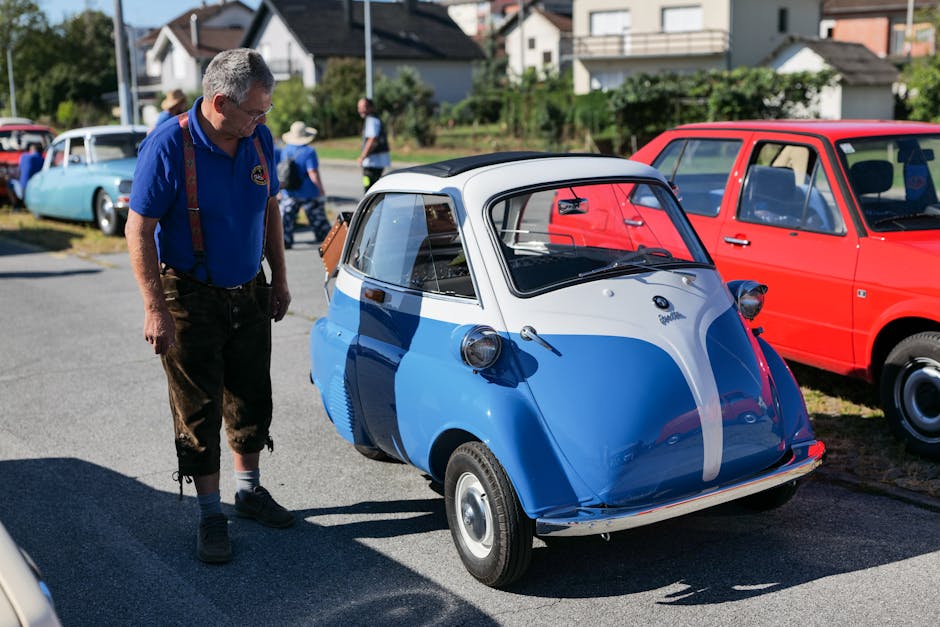
The Microcar Boom: A 2026 Phenomenon
In an era where city living is as bustling as ever, the rise of urban microcars has become a remarkable trend in 2026. These pint-sized vehicles, often measuring less than 3 meters in length, are transforming how city dwellers navigate crowded streets and tight parking spaces. But what’s driving this microcar boom, and why are they becoming an integral part of urban life?
Microcars have long been part of automotive history, but in 2026, they’re experiencing a renaissance thanks to advances in technology, environmental consciousness, and changing urban landscapes. From Tokyo’s Shibuya district to New York’s Greenwich Village, these tiny titans are taking over the roads, offering city residents an intriguing alternative to traditional vehicles.
The Technological Leap: Smart Features in a Small Package
The microcars of 2026 are anything but basic. Packed with advanced technologies, they offer features that rival even the most luxurious sedans. Smart parking assistance, integrated AI driving aids, and advanced safety systems are just the starting point. Companies like Smart and Citroën are leading the charge, making microcars that are not just efficient but also tech-savvy.
Take the Citroën Ami, for example. This all-electric microcar features a cutting-edge navigation system that communicates with urban infrastructure, providing real-time traffic updates and parking availability alerts. Meanwhile, Smart’s EQ Fortwo now comes with a personalized AI assistant that responds to voice commands, ensuring that every ride is smooth and comfortable.
Green and Clean: The Environmental Edge
As global cities push for greener solutions, microcars offer a sustainable choice for environmentally-conscious drivers. Most microcars in 2026 are either fully electric or hybrid, producing minimal emissions compared to their larger counterparts.
In cities like Amsterdam and San Francisco, microcars are also supported by extensive charging infrastructure, making them a practical and eco-friendly option for daily commutes. The shift towards microcars is not just about convenience; it’s also about reducing the urban carbon footprint and promoting cleaner air in densely populated areas.
Cost-Effective Urban Mobility
One of the most appealing aspects of microcars is their affordability. In 2026, the average cost of a microcar is significantly lower than that of a standard sedan. With prices starting as low as $6,000, they offer a budget-friendly alternative for young professionals, students, and anyone looking to cut down on transportation expenses.
Additionally, the operational costs are minimal. With excellent fuel efficiency and lower maintenance needs, microcars are light on the wallet. Many cities also offer incentives for microcar owners, such as reduced registration fees and tax breaks, further enhancing their financial appeal.
Navigating Urban Spaces with Ease
City living often means dealing with traffic congestion and limited parking. Microcars excel in these environments due to their compact size and agility. They can easily maneuver through tight spots and are perfect for zipping around urban streets with narrow lanes.
In places like Paris and Rome, where parking is notoriously challenging, microcars can fit into spaces that would be off-limits to larger vehicles. This flexibility makes them a favorite among urbanites who value convenience and efficiency.
Practical Takeaway: Is a Microcar Right for You?
As we embrace 2026, microcars are more than just a trend; they’re a practical solution for modern urban challenges. If you find yourself navigating crowded city streets, struggling with parking, or simply seeking an eco-friendly and cost-effective vehicle, a microcar might just be the perfect fit for your lifestyle.
Before making the leap, consider your daily driving habits, the infrastructure available in your city, and your personal preferences. With a range of models and features to choose from, microcars offer the flexibility to match your needs while leading the charge towards a more sustainable urban future.