The Rise of Autonomous Driving Technologies
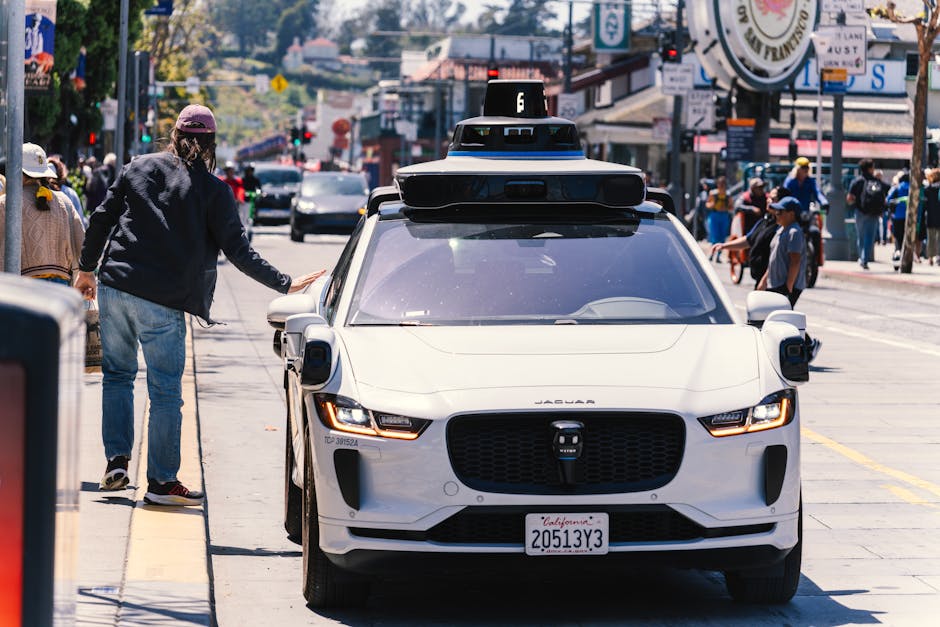
The rapid development of autonomous driving technologies has been nothing short of revolutionary over the past few years. By 2027, we’re anticipating that fully autonomous vehicles will become a familiar sight on roads across the globe. Companies like Tesla, Waymo, and NVIDIA are at the forefront of this shift, continuously refining their AI systems to navigate complex traffic scenarios with ease. This transition is expected to drastically reduce human error, which is responsible for over 90% of traffic accidents, according to the National Highway Traffic Safety Administration (NHTSA).
As we edge closer to 2027, we can expect advances in sensor technology, such as LiDAR and radar systems, to enhance these vehicles’ ability to detect and respond to their environment. Imagine a world where commuting allows you to catch up on emails or even take a quick nap, with your car safely handling the journey.
The Integration of Vehicle-to-Everything (V2X) Communication
Another pivotal development in car safety is the integration of Vehicle-to-Everything (V2X) communication systems. This technology enables vehicles to communicate with each other, traffic signals, and even pedestrians equipped with smart devices. By 2027, we expect V2X to be a standard feature in most new cars, significantly reducing accidents caused by miscommunication and lack of visibility.
Imagine approaching a busy intersection where your car preemptively slows down because it ‘knows’ that a pedestrian is about to step onto the crosswalk, even if they are not yet visible to the driver. Cities like Las Vegas and Ann Arbor in the United States have already started implementing V2X infrastructures, setting the stage for wider adoption in the coming years.
Enhanced Driver Monitoring Systems
While fully autonomous vehicles are on the horizon, driver monitoring systems will continue to play a crucial role in enhancing road safety. By 2027, these systems are expected to be more sophisticated, utilizing advanced sensors and AI algorithms to assess a driver’s alertness and attention levels.
For instance, if a driver begins to nod off, the system might first issue an auditory alert. If the driver’s attention does not return, the car could autonomously take over control, safely pulling over to the side of the road. These advances could be lifesaving, particularly on long, monotonous drives where fatigue sets in.
Advanced Airbag Systems
Airbags have been a staple of car safety for decades, but the technology behind them is continually evolving. By 2027, we anticipate more personalized airbag systems that adjust deployment based on individual passenger characteristics like size, weight, and seating position. This customization is designed to minimize injury from airbag deployment, which can be harmful in some scenarios.
Moreover, external airbags might become more common, especially on high-end models. Deployed upon imminent collision detection, they serve as an additional buffer, further protecting occupants and pedestrians alike.
Improved Cybersecurity Measures
As vehicles become more connected, cybersecurity has emerged as a vital component of car safety. By 2027, we expect significant advancements in protecting vehicles from cyber threats. Imagine driving a car that not only shields you from physical harm but also safeguards your data from malicious attacks.
Manufacturers are investing heavily in secure software architectures and regular over-the-air updates to mitigate potential vulnerabilities. The automotive industry is collaborating with cybersecurity firms to create robust defense mechanisms, ensuring that your journey remains safe from hackers.
Practical Takeaway
Looking ahead to 2027, the landscape of car safety is poised to undergo profound transformations. From autonomous driving and V2X communication to enhanced driver monitoring and cybersecurity measures, these innovations aim to make our roads safer and our journeys more enjoyable. As these technologies become mainstream, they will not only save lives but also redefine our relationship with automobiles in ways we have only dreamed of.